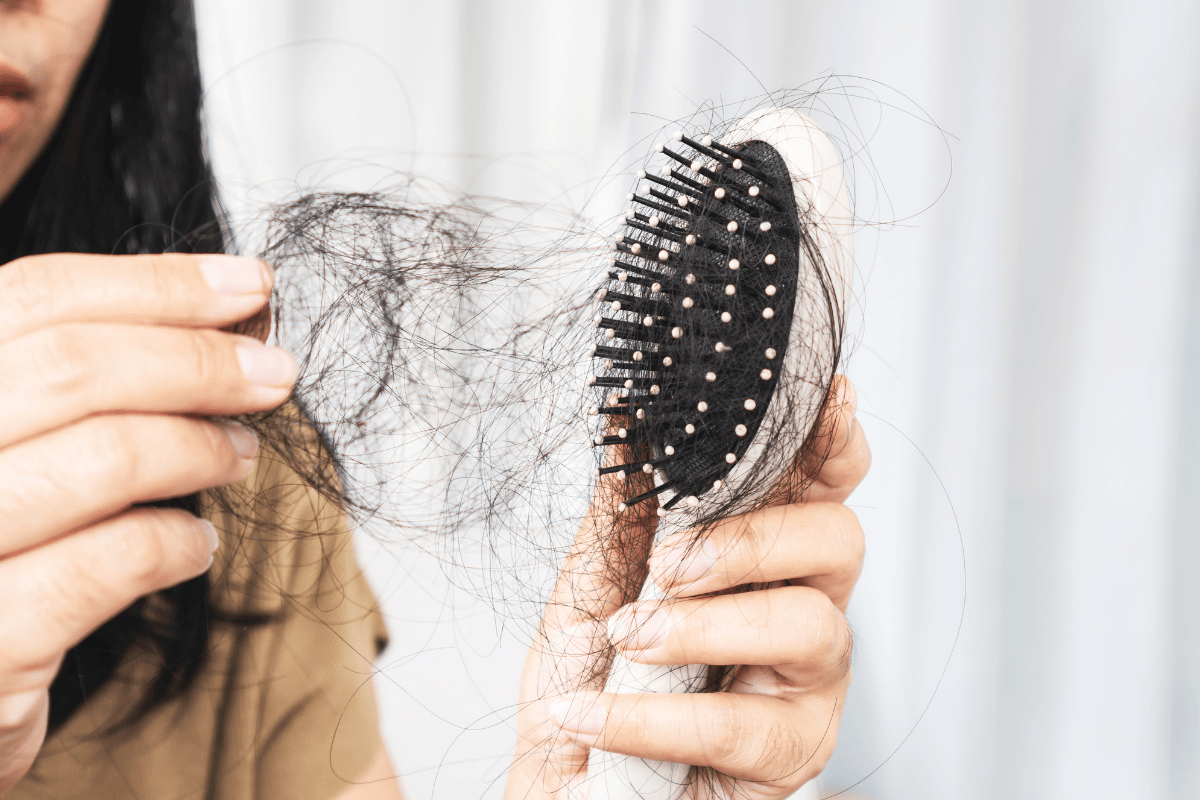
If you’ve spent time reading hair treatment labels, you’ve probably seen ingredients like keratin, ceramides, panthenol, or even that long one — bis-aminopropyl diglycol dimaleate. But there’s another compound showing up more often in repair-focused formulas: maleic acid.
It’s not trending. But it does something most conditioning agents don’t — it gets inside the hair shaft and starts stabilizing damaged areas from within.
Not just coating. Not just filling gaps. Actually interacting with broken protein structures.
And no, it’s not rebuilding disulfide bonds — that’s a different job. Maleic acid works on a weaker but important level: ionic bonding.
Let’s break down how it works — without the hype.
Table of Contents
What is Maleic Acid?
Maleic acid, which is an organic compound (C₄H₄O₄) of dicarboxylic acid. Historically used in industrial applications — resins, coatings, polymers — it wasn’t originally meant for cosmetics.
But in recent years, formulators have started using small amounts in hair repair systems because of its unique charge behavior and ability to bind to damaged keratin.
It’s not a natural component of hair, unlike amino acids such as cysteine or glutamic acid. But it interacts strongly with exposed protein sites in compromised fibers.
Most conditioners work on the surface — smoothing cuticles, adding shine, and reducing friction. Maleic acid goes deeper. It enters the cortex, especially in bleached or heat-damaged zones, and starts forming supportive links where proteins have begun to separate.
That’s not marketing. That’s chemistry.
Why Surface Treatments Aren’t Enough
Hair damage isn’t just about dryness or split ends. That’s the symptom. The real issue is a structural breakdown inside the cortex.
When you bleach, color, flat iron, or even over-wash your hair, you’re breaking different types of bonds:
- Disulfide bonds – strongest, broken by chemical processing
- Hydrogen bonds – broken by water and heat
- Salt bridges (ionic bonds) – sensitive to pH changes
- Van der Waals forces – weak but numerous
Most repair products focus on disulfide bonds (like bond builders) or hydrogen bonding (conditioners). Some use hydrolyzed proteins to patch holes.
How Maleic Acid Works: Step by Step
There are multiple ways in which maleic acid works on your damaged hair. It works and performs in specific conditions and ways that yield the best results.
Let’s quickly check out.
1. It Targets Exposed Positive Charges
When hair is damaged — especially by bleach or high heat — parts of the keratin molecule, like lysine and arginine, lose their neutral state and become positively charged.
Maleic acid carries a negative charge. So it’s naturally drawn to these spots through electrostatic attraction.
This isn’t passive diffusion. It’s targeted movement. The more damaged the area, the more positive charge it exposes — which means maleic acid concentrates exactly where it’s needed most.
2. It Forms Ionic Cross-Links
Once inside the cortex, maleic acid acts as a bridge between positively charged protein chains.
These aren’t permanent covalent bonds — they’re ionic interactions. Weaker than disulfide bonds, yes, but still strong enough to reduce brittleness and improve elasticity.
Think of them as internal supports — not a full rebuild, but enough structure to keep strands from snapping during brushing or styling.
3. It Requires Acidic Conditions
Maleic acid only works well at low pH — typically between 4.0 and 4.5.
In alkaline environments (like after bleaching), the hair swells, charges shift, and binding doesn’t happen efficiently. But under slightly acidic conditions, the cuticle relaxes just enough for penetration, while the protein structure maintains the right charge balance.
That’s why many treatments with maleic acid are formulated to be acidic — not just for scalp comfort, but because it enables function.
4. It Helps Keratin Regain Structure
There’s a secondary effect: maleic acid appears to encourage keratin chains to return to their natural alpha-helix shape.
How? Partly due to the physical constraint of the new ionic links, partly due to pH stabilization. When keratin holds its proper coil, hair regains some bounce and resistance to deformation.
5. It Supports Other Ingredients
Maleic acid rarely works alone. You won’t find it listed high in the ingredient deck.
But it plays a support role — tightening the internal matrix so proteins, lipids, and silicones can adhere better to the surface.
So even if it’s not the main event, it helps the whole formula perform more effectively.
What Results Can You Expect?
Lab tests show measurable improvements:
- Treated hair resists breakage up to 45–50% better after repeated chemical exposure
- Single-fiber analysis reveals less internal cracking
- Cuticles stay flatter, even after multiple shampoos
- Microscopy shows fewer voids in the cortex and reduced swelling when wet
User-reported effects include:
- Less tangling after washing
- Reduced frizz in high humidity
- Improved shine — not from silicones, but from smoother light reflection
- Hair feels stronger, fuller — without heaviness
Where You’ll Find Maleic Acid?
Look for maleic acid in:
- Post-bleach or post-color treatments
- Reconstructive masks and intensive conditioners
- Formulas with pH between 3.8 and 4.5
- Systems that include chelating agents like EDTA
Why EDTA?
Because metal ions from hard water — such as copper and iron — can interfere with bond repair. Chelators remove those contaminants, creating a cleaner environment for maleic acid to work.
The best products don’t just add it randomly. They design the entire system around it.
Important Things to Know Before Using it for Hair Damage
- Use at low level for safety. Typically used at 0.1%–0.5%. No safety red flags in the EU, U.S., Canada, or Japan.
- Use after chemical services, not during. Alkaline conditions block its action.
- Avoid before relaxers or thermal straightening — high pH prevents binding.
- Not effective on fully degraded hair — if the cortex is gone, there’s nothing left to stabilize.
- Best with regular use — weekly or bi-weekly gives better results than one-off treatments.
- Pairs well with low-pH conditioners, bond builders, and lightweight proteins.
- May cause mild tingling in sensitive scalps with leave-in formulas — patch test first.
- It doesn’t build up. It rinses out completely with normal shampooing.
Final Word
Maleic acid won’t trend on social media. But in the background, it’s becoming a key player in advanced hair repair.
It doesn’t replace disulfide bond builders. It complements them — focusing on ionic stability deep in the cortex, helping hold protein strands together when they start drifting apart.
For anyone dealing with long-term damage from color, bleach, or heat, it’s worth paying attention to formulas that include it — especially when paired with proper pH and supporting ingredients.
Because real repair isn’t about gloss, it’s about structure. And sometimes, the quietest ingredients make the biggest difference.

Ilesh Khakhkhar
Author
Ilesh Khakhkhar is the Founder & Managing Director of UBIK Solutions Pvt. Ltd., a leading cosmeceutical company in India. Starting from humble beginnings in 2003 with Ethicare Remedies, Ilesh has expanded his influence across the dermatology industry with multiple ventures including Ethinext Pharma and My Derma Store.
YOU MAY ALSO LIKE


WRITE A COMMENT
Login
0 Comments
Oldest