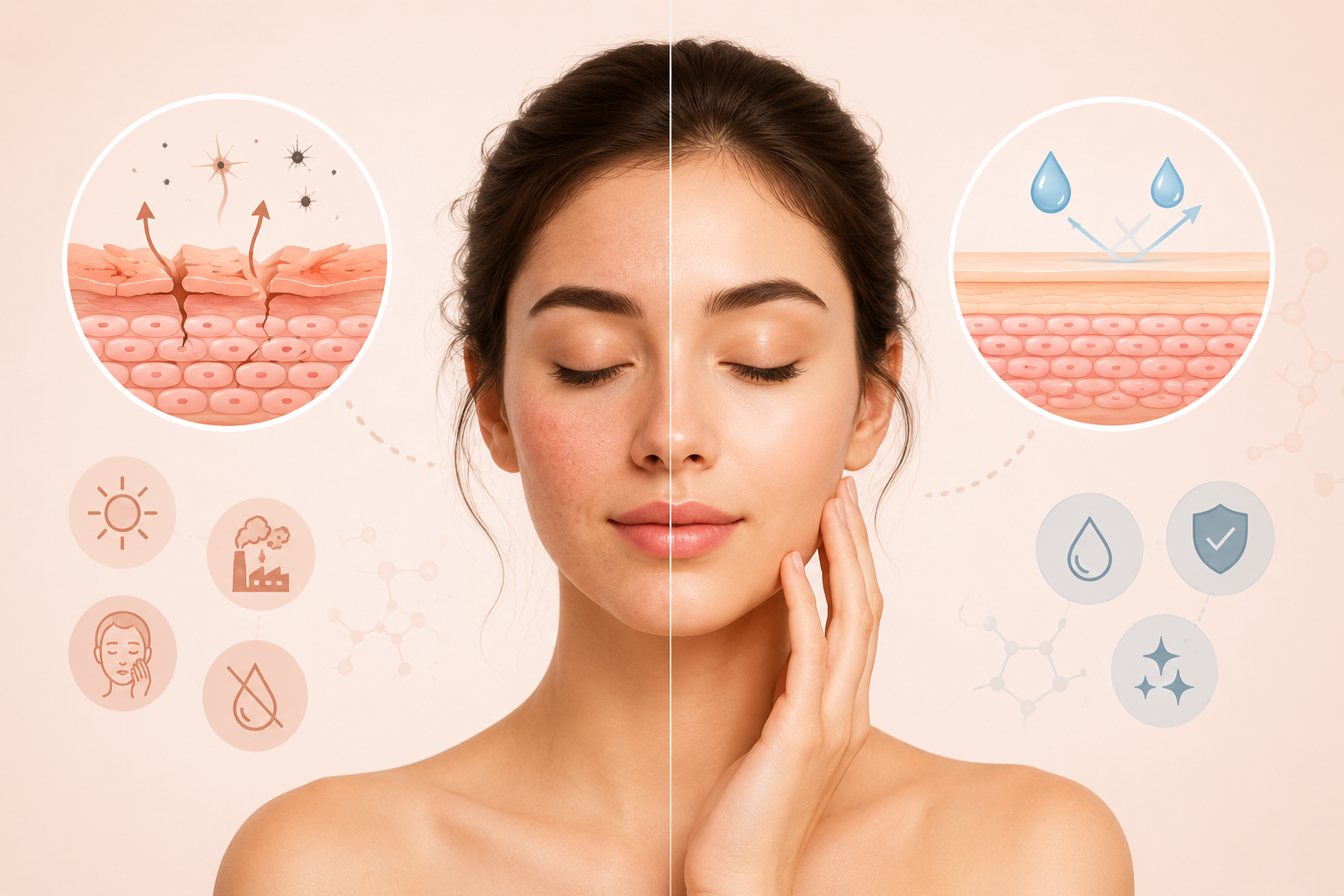
The sun exposure in India is always harsh and also for very long hours for most of the people. But, the level of sun impact on skin in India is so harsh that even a short walk to work or normal daily commute on an open vehicle. Such limited sun exposure is good enough to damage your skin slowly but surely. But, the sad point is, many of us realise this only when our skin starts showing the impact like skin tanning or rough skin texture or some stubborn pigmentation that does not fade away automatically or even after some basic at home treatments. This is where the cause of worry starts.
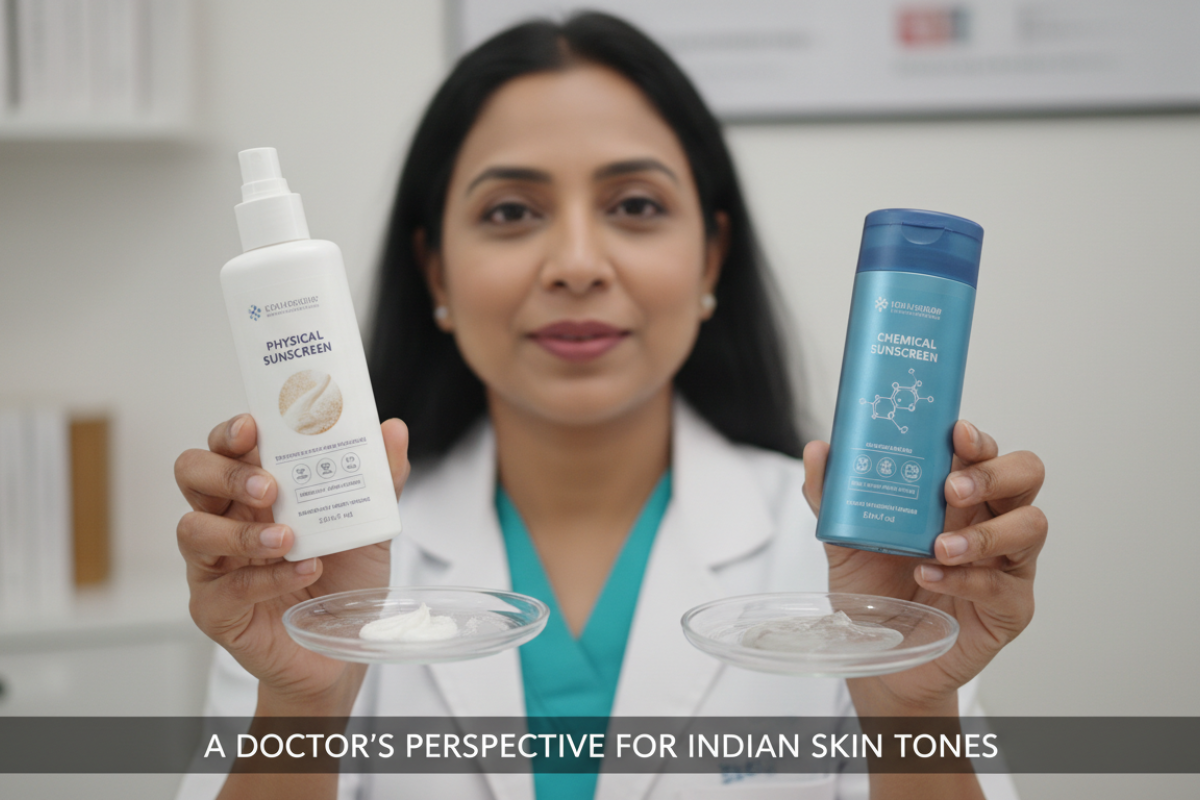
The first and biggest question following this worries is, does the sunscreen truly work for Indian skin and if yes, exactly what it is and how. The most important to know and answer here is whether to opt for physical sunscreen or chemical sunscreen. Some of you might know that something like this exists, but some of you might not.
So, here let’s start with understanding both, how they work on your skin, and how exactly they are suitable in which skin condition and on which skin type.
Table of Contents
- 1 What is Physical Sunscreen?
- 2 What is Chemical Sunscreen?
- 3 3 Key Differences Between Physical And Chemical Sunscreens
- 4 How Indian skin responds to both sunscreens?
- 5 Common Myths About Sunscreen Use in India
- 6 What Dermatologists Recommend for Indian Complexions?
- 7 How to Choose the Right Sunscreen for Your Skin Type?
What is Physical Sunscreen?
Most popularly it is known as mineral sunscreen. Many doctors even often recommend it for those who are looking for a gentle yet effective option that protects their skin as soon as it is applied.
Physical sunscreen sits on the skin surface as soon as it is applied on skin and creates a protective layer that reflects and scatters the sun rays coming onto your skin.
Indian skins normally have higher melanin and usually react strongly to the sunlight, so physical sunscreen works as a calming agent for sensitive skin tones.
What is Chemical Sunscreen?
Chemical sunscreen contains active ingredients that absorb the sun rays and convert them into heat which is then released from the skin. Because of this mechanism the texture feels lighter and blends well without leaving any visible cast on the face.
For Indian skin tones chemical sunscreen can be very effective when used correctly. It needs around fifteen to twenty minutes to settle before stepping out into the sun.
3 Key Differences Between Physical And Chemical Sunscreens
Physical sunscreens sit on top of the skin and block UV rays using mineral filters, while chemical sunscreens absorb into the skin and convert UV radiation into heat. The choice between them affects not just protection, but also comfort, skin tolerance, and how well the product fits into your daily routine.
How They Work: Physical sunscreens reflect UV rays whereas chemical sunscreens absorb and neutralize them
Skin Feel: Physical formulas can feel thicker but are gentler whereas chemical ones are lighter but may irritate sensitive skin
Protection Start Time: Physical works right away whereas chemical needs 15 to 20 minutes to activate
How Indian skin responds to both sunscreens?
Indian skin carries more melanin which means it reacts quickly to sunlight. Even a short walk can lead to tanning and stubborn patches that stay for weeks. This makes consistent sun protection an important part of daily care.
Both physical and chemical sunscreens protect the skin but the way Indian skin behaves with each product feels different. These simple points explain how the skin usually responds.
India skin response to physical sunscreen
• It feels gentle on sensitive skin that reacts quickly to strong products
• It forms an instant protective layer which helps reduce sudden tanning
• It supports people who experience redness when exposed to strong sunlight
• It stays steady for long hours which benefits people who work outdoors
• It brings comfort to users dealing with regular pigmentation and uneven tone
Indian skin response to chemical sunscreen
• It blends smoothly and leaves no visible layer on medium and deeper tones
• It feels light and comfortable for people who stay indoors most of the day
• It spreads easily and helps users apply the right amount without effort
• It remains breathable even in humid weather that is common across India
• It sits well under makeup and prevents patchy or chalky appearance
• It offers a soft clean finish that many younger users enjoy
• It supports daily wear for people who want protection without heaviness
Common Myths About Sunscreen Use in India
Many think Indian skin doesn’t need sunscreen because of its natural melanin, but melanin only gives minimal protection, equivalent to SPF 13, and won’t prevent dark spots, melasma, or long term sun damage. UVA rays even pass through windows, so daily use is essential indoors and out.
Another myth is that all physical sunscreens leave a white cast. Today’s mineral formulas use micronized zinc oxide or subtle tints that blend seamlessly into wheatish to deep skin tones, just patch test on your jawline in daylight.
Some avoid sunscreen fearing breakouts, but it’s usually the added oils or heavy emollients, not the UV filters, that clog pores. Look for “oil free” and “non comedogenic” labels; mineral sunscreens with niacinamide can actually help control acne and shine.
What Dermatologists Recommend for Indian Complexions?
Dermatologists often recommend physical sunscreens for Indian skin tones because they are less likely to irritate or trigger pigmentation issues. Zinc oxide, in particular, offers broad spectrum protection while soothing inflammation, making it ideal for sensitive, acne prone, or melasma affected skin.
For those who prefer lighter textures, newer hybrid or chemical formulas with photostable filters may be suitable, but only if they are free from common irritants like oxybenzone and fragrance. The key is finding a product that feels comfortable enough to wear every day without compromising skin health.
How to Choose the Right Sunscreen for Your Skin Type?
- Pick physical sunscreens if you have sensitive, acne prone, or post inflammatory pigmentation prone skin because they sit on the surface and reduce irritation risk.
- Opt for chemical or hybrid formulas only if you have normal to oily skin and prefer a matte, invisible finish that layers well under makeup.
- Always check for broad spectrum protection to shield against both UVA aging rays and UVB burning rays.
- Choose SPF 30 to 50 for daily use, as higher SPFs offer marginal gains and may feel heavier.
- Avoid fragrances, alcohol, and oxybenzone if you have reactive or eczema prone skin.
- Test new sunscreens on a small patch of your neck or arm before applying to your face.
- Reapply every three to four hours when outdoors, and immediately after sweating or swimming.
- Consider tinted mineral sunscreens if you struggle with white cast or want extra protection from visible light.
Final Thoughts
The right sunscreen goes beyond SPF, it aligns with your skin type, local weather, and lifestyle. For Indian skin, which is prone to pigmentation and sensitivity, choosing a gentle yet effective formula ensures better long term results.
Daily use matters more than fancy claims. A lightweight, non irritating sunscreen that you actually apply every day will protect your skin far better than a heavy or reactive one you avoid.
For personalized recommendations tailored to your skin type and concerns, connect with the skincare experts at My Derma Store.

Ilesh Khakhkhar
Author
Ilesh Khakhkhar is the Founder & Managing Director of UBIK Solutions Pvt. Ltd., a leading cosmeceutical company in India. Starting from humble beginnings in 2003 with Ethicare Remedies, Ilesh has expanded his influence across the dermatology industry with multiple ventures including Ethinext Pharma and My Derma Store.
YOU MAY ALSO LIKE


WRITE A COMMENT
Login
0 Comments
Oldest