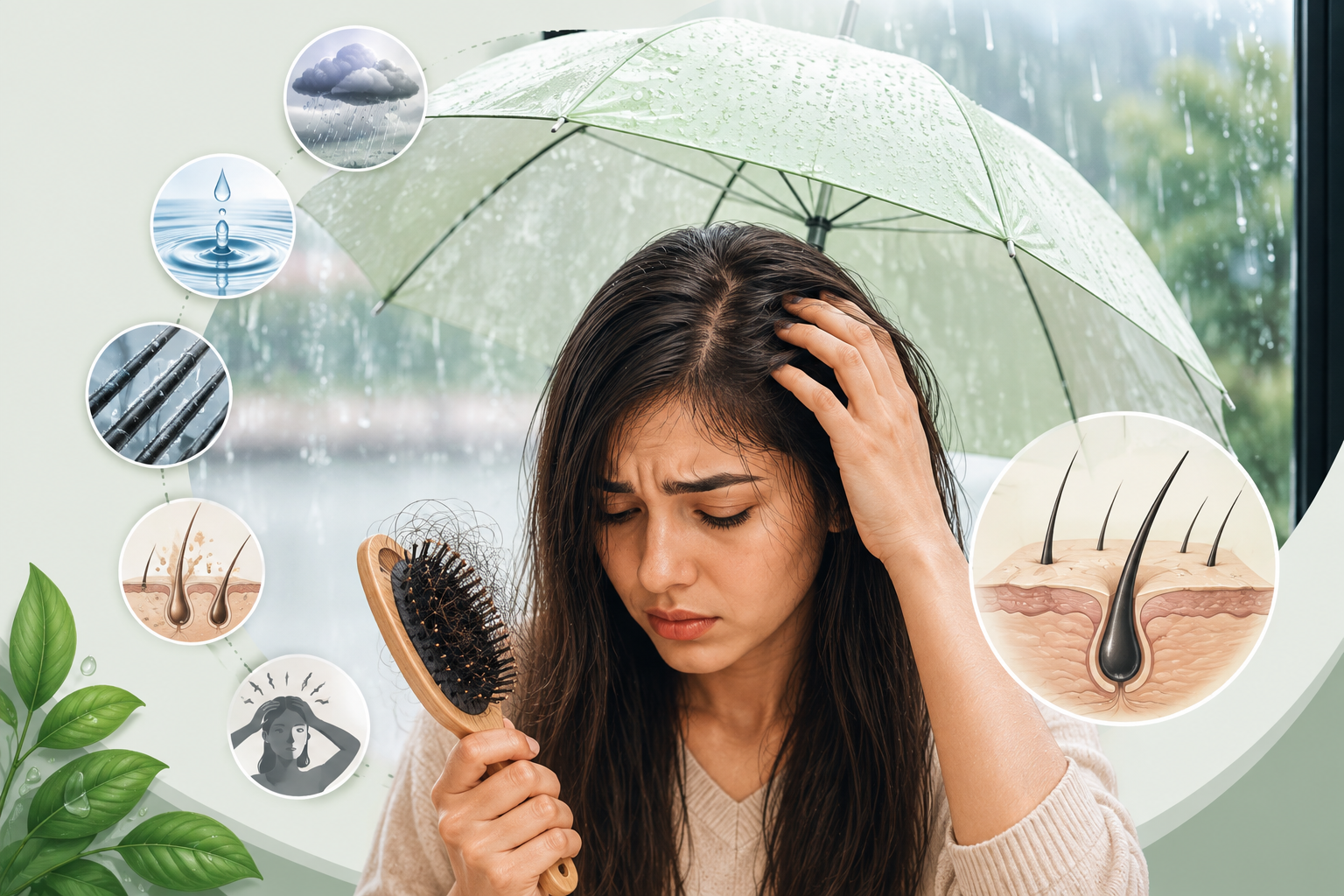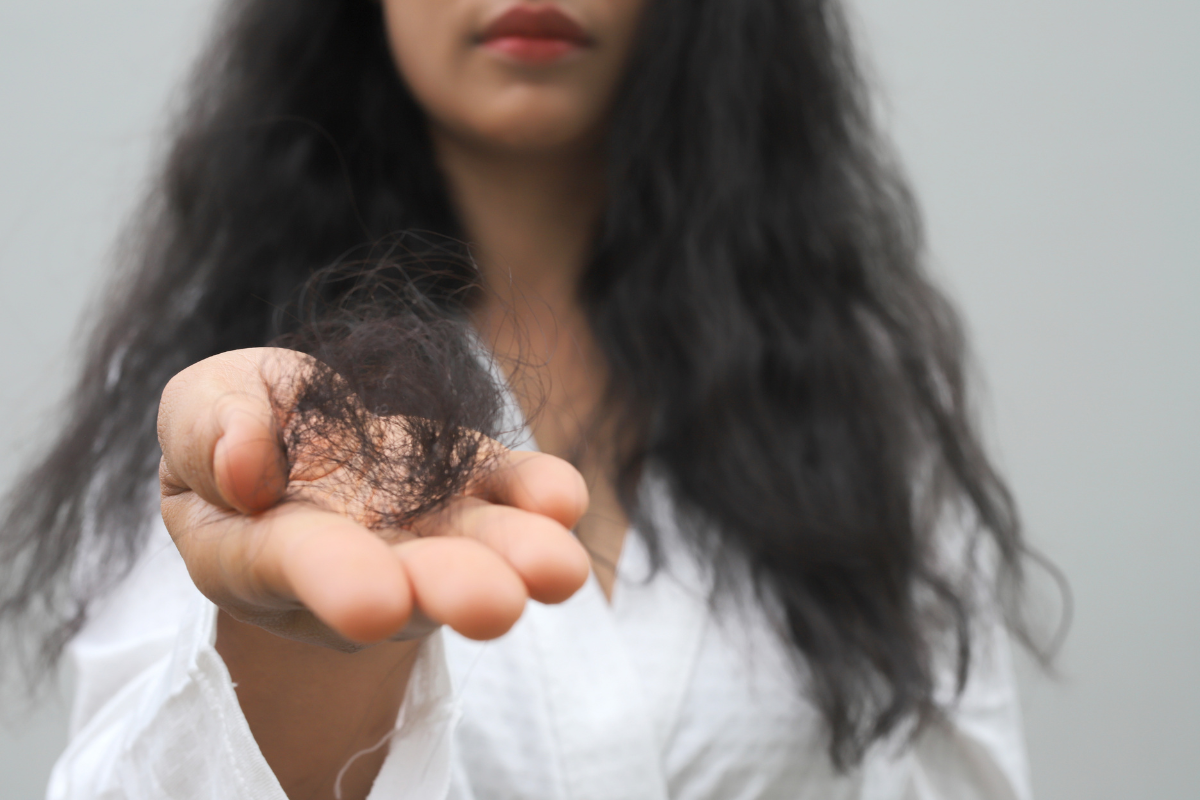
With the start of summer season, the long and hot days start that impacts the human body in many ways. It impacts our hair condition too, but many of us ignore it looking at our face and dealing with hot conditions. There is more hair on your brush and shower noticed during summer season. This is called seasonal shedding and it is a natural process. But, the heat, humidity and sun exposure makes hair fall more than normal levels. Our scalp and strands face some unique stressors during these hot months of summer. This condition disrupts the growth cycle of hair temporarily.
With expanded hair cuticles due to heat, hair strands get more prone to breakage and moisture loss. Sweat buildup clog follicles and UV rays damage the protein structure of each strand. Along with this, there are many other factors raising during the summer season, which makes your hair condition and health abnormal and demands some extra care to deal with it.
That is why you need either proper expert guidance or treatment that gives you a seasonal special routine for hair. In this article, we are going to put some thoughts and share knowledge about the summer triggers that excess hair shedding and how you can identify it. Also we will share a quick 5 step routine to protect your hair during these hot months with some key ingredients you can use in your daily routine during the summer season.
Table of Contents
Why Does Your Hair Shed More When Temperatures Rise?
Hair follicles respond directly to environmental changes, especially temperature and humidity shifts. Heat causes blood vessels in the scalp to dilate, which can temporarily disrupt nutrient delivery to growing hairs. This stress pushes more follicles into the telogen or resting phase, leading to increased shedding 2 to 3 months later.
Sweat contains salt and lactic acid that accumulate on the scalp when not washed regularly. This buildup creates an acidic environment that irritates follicles and weakens the hair root attachment. UV radiation breaks down keratin proteins and damages the cuticle layer, making strands brittle and prone to snapping mid shaft rather than shedding naturally from the root.
Humidity swells the hair shaft by allowing moisture to penetrate the cuticle, causing frizz and tangling. When you brush or comb knotted hair, the pulling force breaks weakened strands or dislodges resting hairs prematurely. Chlorine from swimming pools and salt water from the ocean strip natural oils, leaving hair dry and more susceptible to mechanical damage during daily styling.
How to Tell If Your Summer Hair Fall Is Normal or a Concern
Seasonal shedding typically peaks in late summer and early fall, with hair returning to normal thickness within 2 to 3 months. Concerning hair loss persists beyond seasonal patterns, shows visible thinning, or comes with scalp symptoms that indicate an underlying issue needing attention.
Watch for these signs to assess your situation:
- Losing more than 100 strands daily for over 6 weeks suggests a problem beyond seasonal shedding
- Noticeable thinning at the crown or temples that worsens through summer indicates progressive loss
- Patchy bald spots or circular areas of hair loss signal conditions like alopecia areata
- Scalp redness, itching, or flaking accompanies excessive shedding in inflammatory conditions
- Hair breaks easily mid shaft rather than shedding from the root points to damage over growth issues
- Regrowth fails to appear by early fall when seasonal shedding should naturally resolve
- Family history of hair loss combined with summer thinning may accelerate genetic patterns
- Sudden shedding after starting new medications or supplements requires medical evaluation
Summer Hair Care Routine That Prevents Excess Hair Shedding
A summer hair routine focuses on protecting the scalp environment and minimizing mechanical damage to weakened strands. Keep cleansing gentle, shield hair from direct sun exposure, and avoid tight styles that pull on follicles already under environmental stress. Consistency matters more than complicated product rotations during hot months.
Step 1: Cleanse your scalp regularly but gently
Wash every 2 to 3 days with a sulfate free shampoo to remove sweat and oil buildup without stripping natural moisture. Massage the scalp with fingertips, not nails, to stimulate circulation without causing micro trauma to follicles.
Step 2: Apply heat and UV protection before going outside
Spray a leaf in UV protectant or wear a loose hat when spending extended time in direct sunlight. UV filters in hair products create a barrier that prevents keratin breakdown and color fading from sun exposure.
Step 3: Hydrate strands with lightweight conditioners
Use a silicone free conditioner focused on mid lengths to ends to prevent tangling without weighing hair down. Look for humectants like glycerin that attract moisture in humid conditions without creating heavy buildup.
Step 4: Choose loose, low tension hairstyles
Avoid tight ponytails, braids, or buns that pull on the hairline and stress follicles. Opt for loose waves, low buns, or clips that distribute tension evenly and reduce breakage from constant pulling.
Step 5: Limit heat styling and refresh between washes
Air dry when possible and use dry shampoo to absorb excess oil on non wash days. Heat tools weaken already stressed summer hair, so reserve blow drying and straightening for special occasions only.
Key Ingredients That Combat Summer Hair Damage
Summer hair needs ingredients that protect against environmental damage while supporting follicle health during seasonal stress. These three components deliver visible results in reducing breakage, controlling shedding, and maintaining scalp balance through hot, humid months.
- Niacinamide improves blood circulation to the scalp and strengthens the hair shaft by increasing keratin production, helping strands resist breakage from heat and humidity exposure
- Caffeine stimulates follicles and extends the growth phase when applied topically, counteracting the temporary growth slowdown caused by summer heat stress on the scalp
- Panthenol penetrates the hair shaft to retain moisture and smooth the cuticle, preventing frizz and tangling that lead to mechanical damage during humid weather conditions.
When to Bring in a Hair Care Expert?
Consult a hair care expert if shedding continues past early fall. If you notice visible thinning that worsens despite routine adjustments, or if your scalp shows redness, scaling, or pain alongside hair loss, visiting experts is a must.
Prescription treatments like minoxidil or anti androgen therapies work at the follicle level when over the counter care cannot address underlying hormonal or genetic factors.
Professional evaluation helps distinguish seasonal patterns from progressive conditions that need targeted intervention before further density loss occurs.
Final Thoughts
Summer hair fall follows predictable patterns when you understand the environmental triggers and adjust your routine accordingly. Protecting your scalp from heat, keeping follicles clean from sweat buildup, and minimizing mechanical damage helps maintain thickness until seasonal shedding naturally resolves.
Small consistent changes in how you cleanse, protect, and style make a lasting difference in hair health through hot months and beyond. Reach out to our experts now for guidance matched to your hair type, climate, and seasonal concerns.

Ilesh Khakhkhar
Author
Ilesh Khakhkhar is the Founder & Managing Director of UBIK Solutions Pvt. Ltd., a leading cosmeceutical company in India. Starting from humble beginnings in 2003 with Ethicare Remedies, Ilesh has expanded his influence across the dermatology industry with multiple ventures including Ethinext Pharma and My Derma Store.
YOU MAY ALSO LIKE

WRITE A COMMENT
Login
0 Comments
Oldest