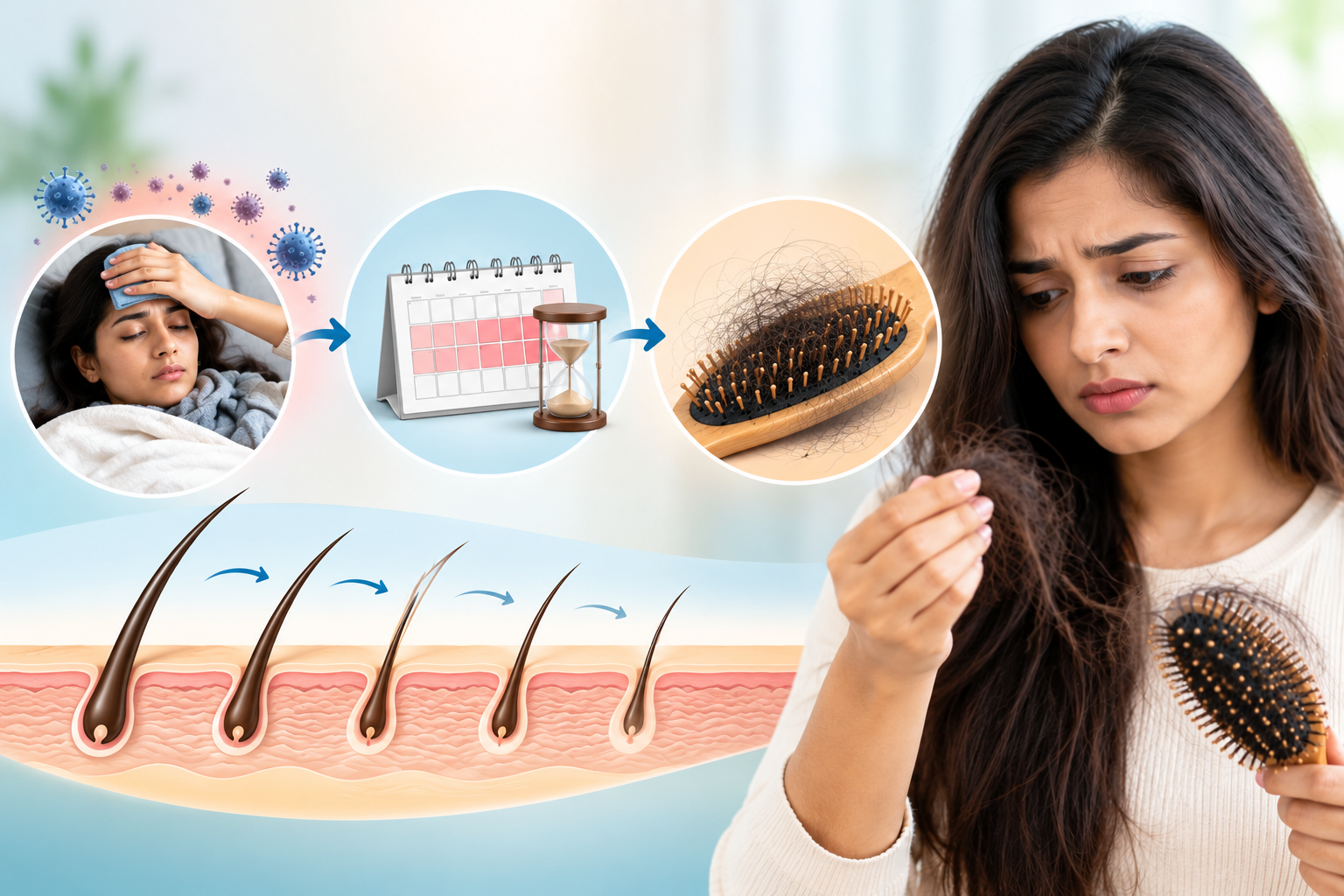
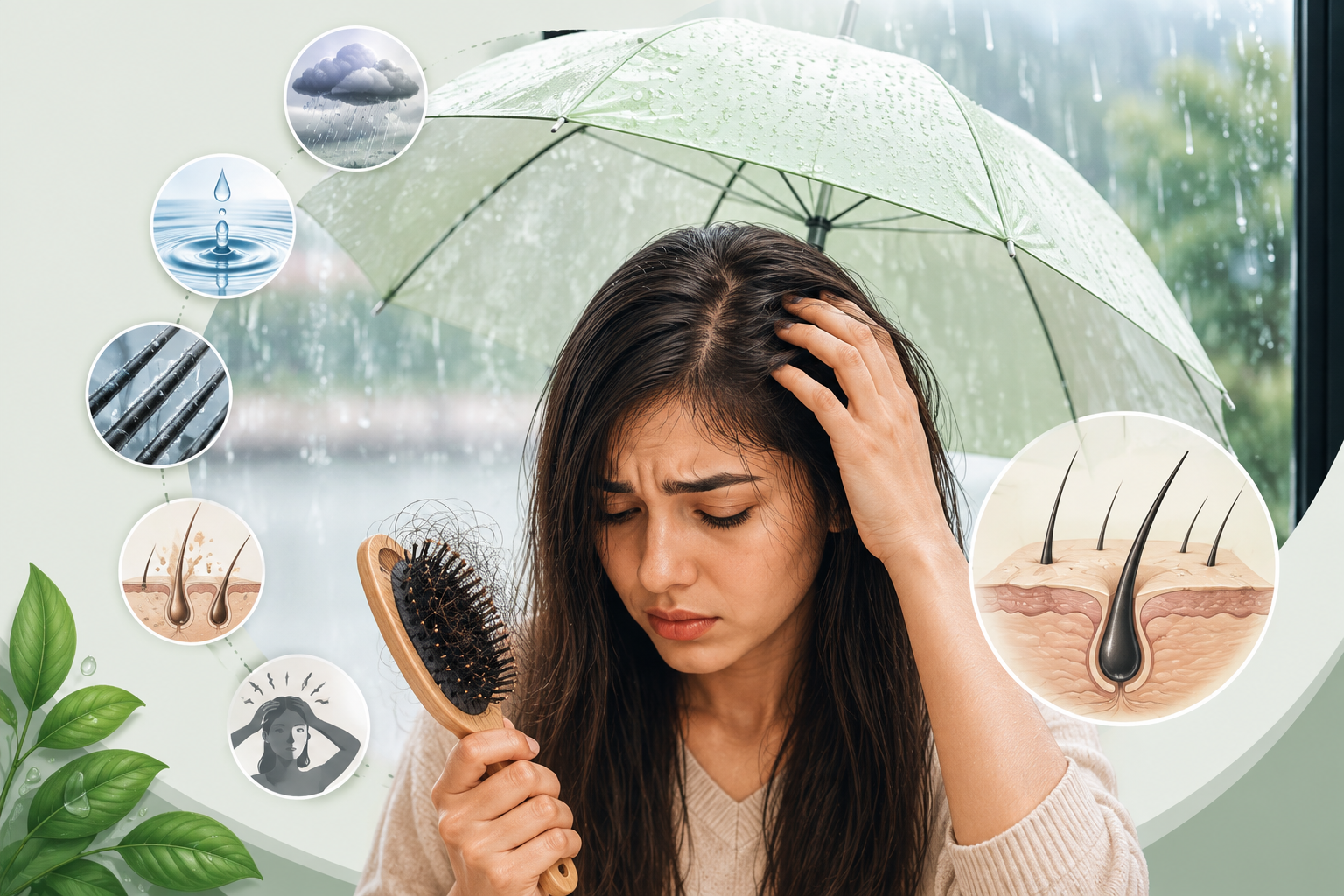
When you are dealing with fever or viral illness you feel completely drained or lost, but when it starts getting off, you feel back to normal with regained energy and stable appetite and the thought comes in your mind that your body has finished healing. But, after sometime, maybe eight to ten weeks later, you may notice an unusual amount of hair fall, in the shower drain or pillow or comb. That might surprise you but you are completely clueless about what happened all of a sudden.
Actually this is not a sign of permanent damage or a mysterious new hair condition you have to deal with. It is in fact a normal biological response that follows a predictable timeline after a fever or viral illness. It’s a reaction of your hair follicles to the stress your body went through during the illness.
People might be unaware about this biological response of the body and that is why in today’s article we are pointing out why the hair shedding happens after two to three months of fever or viral illness and how to deal with it.
Table of Contents
Why Hair Doesn’t Fall Out Immediately?
Hair growth does not stop the moment you get sick, but your body quietly shifts how it manages each strand. Every hair on your scalp moves through a repeating cycle that includes a long growth phase, a brief transition, and a resting stage where the strand naturally prepares to detach.
When your immune system fights off a fever or viral infection, it sends a quiet signal that pushes a larger group of active hairs into that resting stage all at once. The tricky part is that resting hairs do not fall out right away. They stay anchored in the follicle for several weeks while new growth silently begins underneath.
Once that internal replacement is ready, the old strand simply loosens and sheds, which is why you only notice the hair fall two to three months after the illness has passed. The delay is just your scalp following its own internal calendar, not a sudden breakdown.
What Your Body Prioritizes While You Recover?
When your body fights off a fever or viral infection, it quietly reshuffles its priorities to focus on survival and recovery. Hair growth is not essential for staying alive, so your system temporarily redirects energy, nutrients, and cellular resources toward healing vital tissues and restoring immune balance. This shift does not mean something is wrong with your hair. It simply means your body is following a built-in protection plan that pauses non-essential functions until it is strong enough to resume them.
- Your immune system draws heavily on protein and iron to rebuild white blood cells, which temporarily leaves fewer building blocks for hair strands.
- Low-grade inflammation lingers in the scalp long after your fever breaks, sending quiet signals that slow down new follicle activity.
- Stress hormones stay elevated for weeks after illness, extending the resting phase of your hair cycle to conserve internal energy.
- Nutrient absorption slows during recovery, so vitamins and minerals that normally support hair growth get redirected to organ repair first.
- Your body conserves calories and blood flow for core functions like digestion and circulation, reducing the supply that reaches scalp follicles.
- Cellular repair takes priority over cosmetic functions, meaning skin and tissue healing get first access to amino acids and hydration.
- Hormonal fluctuations triggered by illness disrupt the natural hair growth timeline, pushing more strands into the shedding stage at once.
- The nervous system shifts into a recovery mode that temporarily dampens growth signals to the scalp until internal balance is restored.
A Phased Approach to Gentle Recovery
Supporting your hair after illness does not require aggressive treatments, expensive supplements, or drastic routine changes. The most effective approach works with your body’s natural timeline by focusing on gentle care, steady nutrition, and patient consistency. Rushing the process or loading your scalp with strong actives can actually interrupt the quiet regrowth already happening underneath. Instead, follow a phased strategy that matches where your hair is in its recovery cycle and gives your follicles exactly what they need at each stage.
Weeks 1 to 4: Focus on Calm and Clean
During the first month after illness, your scalp is still resetting from internal stress and may feel more sensitive than usual. Stick to a mild, sulfate-free shampoo that clears sweat, oil, and leftover residue without stripping natural moisture. Avoid heavy styling products, tight hairstyles, and heat tools, which add unnecessary friction while your follicles are in transition. Let your scalp breathe and focus on keeping the surface clean and comfortable so new growth has a clear path forward.
Weeks 5 to 8: Rebuild Strength from Within
By the second month, your body has usually stabilized its nutrient reserves, and you can start supporting regrowth through steady daily habits. Prioritize balanced meals that include lean protein, iron-rich foods, and healthy fats, since hair strands are made primarily of keratin and need consistent fuel to grow back stronger. Stay hydrated throughout the day and add light scalp circulation through gentle fingertip massage for two minutes each evening. This simple step encourages blood flow to the follicles without irritating the surface or forcing premature shedding.
Beyond 8 Weeks: Support Active Regrowth
Around the third month and beyond, you will likely notice shorter, finer strands appearing along your hairline and part, which is a clear sign that follicles have re-entered the growth phase. Continue your gentle cleansing routine and maintain consistent nutrition, but you can slowly reintroduce lightweight conditioners or leave-in treatments to protect new strands from breakage. Track progress by taking monthly photos in consistent lighting instead of counting daily shed hairs, since temporary thinning is normal during this transition. If shedding continues heavily past the four-month mark or you notice visible patches, professional guidance can help rule out other factors and keep your recovery on track.
Final Thoughts
Post-illness hair fall is a temporary reset that follows a clear biological pattern, not permanent damage or a reason to panic. When you support your body with gentle care, steady nutrition, and patience, your scalp naturally returns to its normal growth rhythm.
You do not have to navigate this recovery phase alone or guess which products actually support healthy regrowth. Reach out to our experts for personalized hair recovery guidance and a clear care plan tailored to your timeline.

Ilesh Khakhkhar
Author
Ilesh Khakhkhar is the Founder & Managing Director of UBIK Solutions Pvt. Ltd., a leading cosmeceutical company in India. Starting from humble beginnings in 2003 with Ethicare Remedies, Ilesh has expanded his influence across the dermatology industry with multiple ventures including Ethinext Pharma and My Derma Store.
YOU MAY ALSO LIKE
WRITE A COMMENT
Login
0 Comments
Oldest