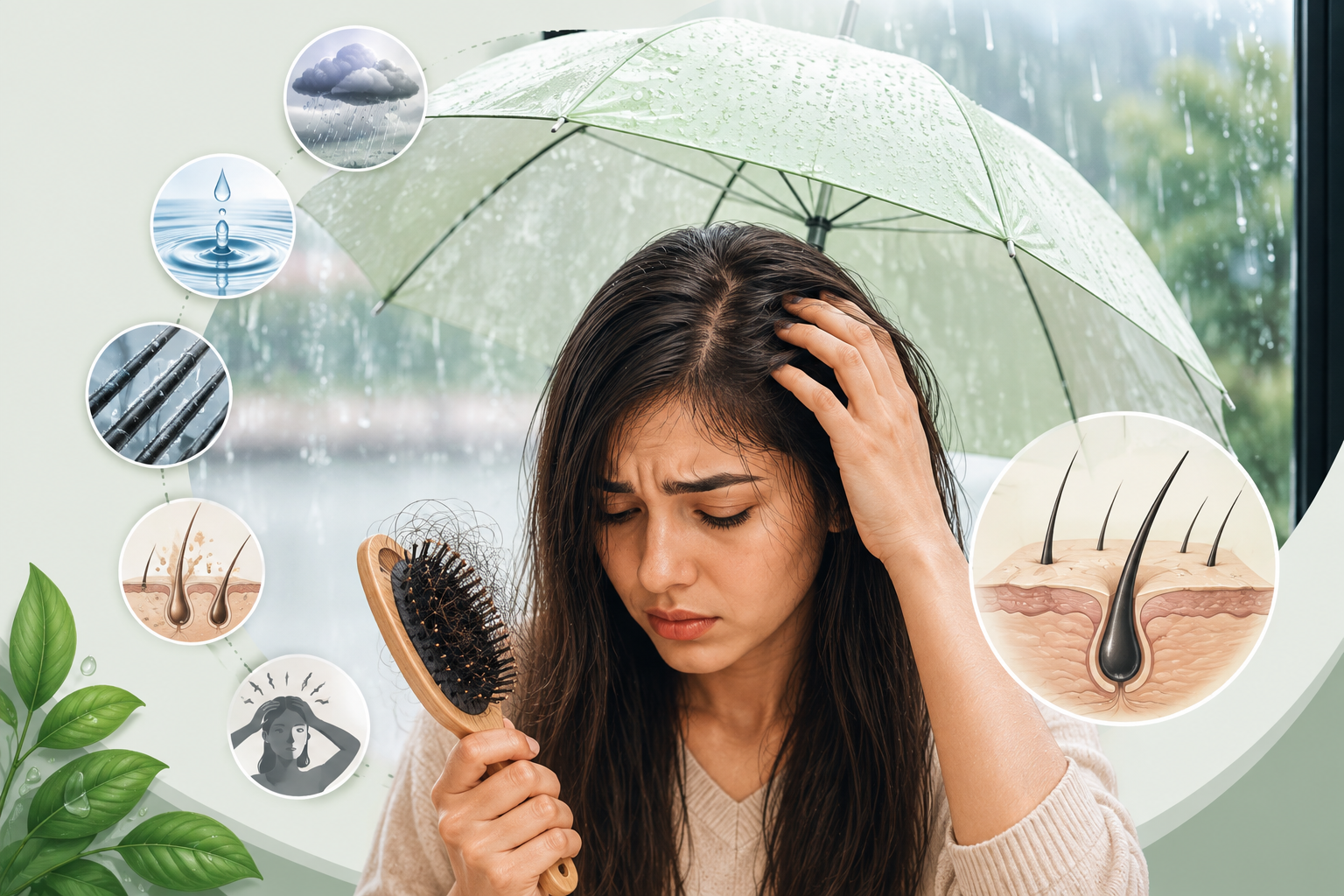
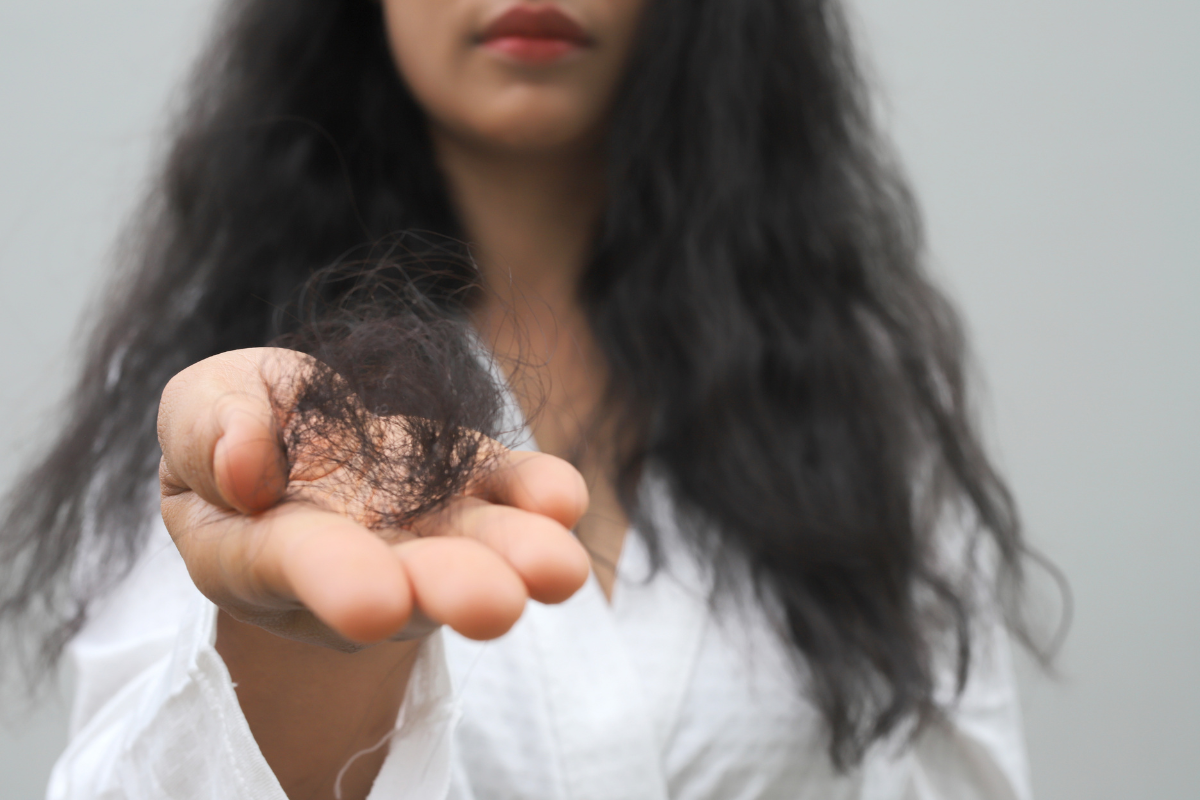
The rainy season makes us feel good after a hard hitting summer and impacts our mood with great joy and beautiful landscapes. But, at the same time it impacts our body too. The major impact you may notice is on your hair. You may notice more strands in your hair brush post a rainy week. Your shower drain has more than normal hair and ultimately you notice a thinner ponytail.
Do you think this is just seasonal bad luck? No, this condition has a proper name called telogen effluvium, a clear trigger and predictable timeline also. Post monsoon, most people experience the situation of sudden hair shedding. THe humidity, changes in scalp and the changing water quality during the rainy season are not less than a storm for hair stress. Our follicles respond by shifting more strands into the resting phase which ultimately goes for hair fall later.
In this article, we will discuss why monsoon pushes more hair shedding, and what this condition called telogen effluvium is and how to deal with it.
Table of Contents
Why Does Hair Fall Spike Right After the Monsoon?
The monsoon season changes your scalp environment in ways that directly impact hair health. High humidity traps sweat and oil, hard rainwater leaves mineral deposits, and fungal growth becomes more likely. These factors combine to stress your follicles and trigger shedding.
Humidity Traps Sweat and Fungus on the Scalp
Moist air prevents sweat from evaporating, creating a damp environment where fungus and bacteria thrive, which irritates follicles and weakens roots
Hard Rainwater Leaves Mineral Buildup on Strands
Rainwater often contains pollutants and minerals that coat hair, making it brittle and prone to breakage during washing or combing
Frequent Washing Strips Natural Scalp Oils
Washing hair more often to combat humidity can remove protective sebum, leaving the scalp dry and follicles more vulnerable to shedding
Wet Hair Is More Fragile and Breaks Easily
Hair absorbs water and swells during monsoon, which makes the cuticle weaker and increases breakage when brushing or styling
Stress and Illness During Rainy Months Push Follicles into Resting Phase
Colds, fatigue, or emotional stress common in monsoon season can trigger telogen effluvium, where hair shifts to shedding mode two to three months later
What is Telogen Effluvium and How Does it Work?
Telogen effluvium is a temporary hair shedding condition triggered by internal or external stress.
Normally, about 90 percent of your hair grows actively while 10 percent rests. When your body faces a shock like illness, hormonal shifts, or seasonal stress, more follicles get pushed into the resting phase at once.
Two to three months later, those resting strands fall out together, which is why you notice sudden shedding long after the trigger happened. The good news is that this process is reversible. Once the stressor passes and your body rebalances, new growth begins and density returns.
What Actually Helps Your Hair Recover After Monsoon Shedding?
Recovery from telogen effluvium does not need complicated routines or expensive treatments. The key is gentle care, steady nutrition, and targeted support that helps follicles return to their normal growth cycle. Follow these practical steps to encourage faster regrowth and reduce daily shedding.
Gentle Cleansing Three Times a Week
Use a mild, sulphate-free shampoo like Seren Shampoo by My derma store to cleanse without stripping natural oils that protect your scalp
Apply a Scalp Soothing Serum Before Bed
Look for serums with niacinamide or panthenol to calm irritation and support follicle health while you sleep, helping reduce inflammation that worsens shedding
Use a Lightweight Leave-In Conditioner on Damp Hair
This seals moisture without weighing hair down, which prevents breakage from humidity and keeps strands flexible during the recovery phase
Add a Weekly Protein or Keratin Mask
A deep treatment with Deep conditioning Hair mask once a week helps rebuild strength in strands weakened by rainwater and humidity, reducing mid-shaft breakage
Take a Biotin or Multivitamin Supplement Daily
Internal support matters. Supplements with biotin, zinc, and iron help provide the building blocks your hair needs to regrow stronger after shedding
Avoid Heat Styling Until Shedding Slows
Skip flat irons and blow dryers for a few weeks to give fragile new growth a chance to strengthen without added stress
Massage Scalp Gently for Two Minutes Each Evening
Light circular motions with fingertips improve blood flow to follicles, which supports nutrient delivery and encourages healthier regrowth
Final Thoughts
Post-monsoon hair fall feels alarming, but it is usually temporary and manageable with consistent care. Telogen effluvium follows a predictable cycle, and once you support your scalp and strands through the shedding phase, new growth will follow.
You do not have to navigate this alone or guess which products actually help your specific hair type. Reach out to our hair experts for personalized guidance and a clear recovery plan made just for you.

Ilesh Khakhkhar
Author
Ilesh Khakhkhar is the Founder & Managing Director of UBIK Solutions Pvt. Ltd., a leading cosmeceutical company in India. Starting from humble beginnings in 2003 with Ethicare Remedies, Ilesh has expanded his influence across the dermatology industry with multiple ventures including Ethinext Pharma and My Derma Store.
YOU MAY ALSO LIKE



WRITE A COMMENT
Login
0 Comments
Oldest