Skincare routine is something that is always confusing as the market is bombarded with products with many promises. But, do you think all of them are going to work for you? Of course not. Every skin is different and you need to understand that. For every skin problem you must carefully choose the ingredient and based on that the relevant product. But again it is not lesser than solving the puzzle, right?
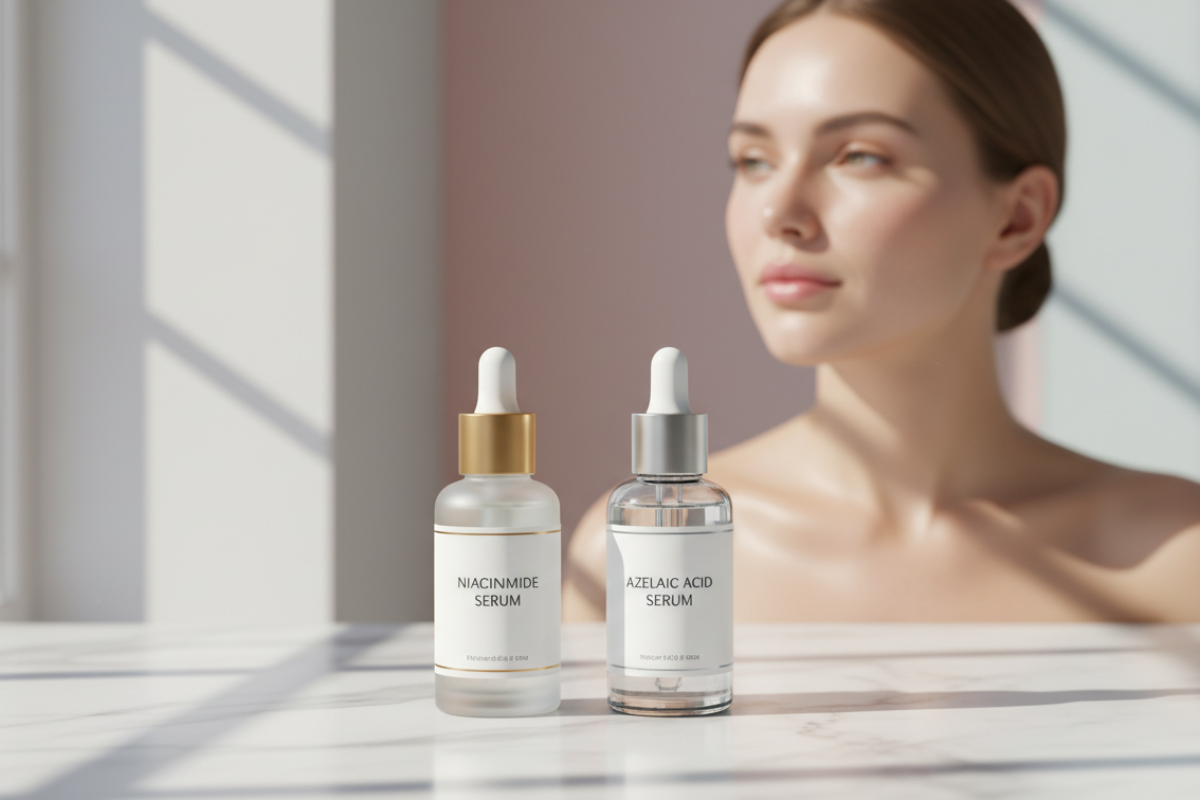
Here, in this article, we are discussing two most important ingredients of them. Niacinamide and Azelaic acid. These two are frequently used in skincare serums with their distinctive benefits. Both have their own effects and benefits on the skin.
So, in this discussion, we will try to put the clarification here on what does what and on what type of skin problems and how to choose the right one.
Table of Contents
How Niacinamide Serum Benefits Your Skin
Niacinamide is one of the forms of vitamin B3 which helps to strengthen the skin barrier and actively regulates the oil production in our skin. It also plays a crucial role in reduction of inflammation and reduces the pore appearance and lets the dark spots fade away over time. All these impacts on skin makes it a perfect ingredient for oily, acne-prone or any sensitive skin type. It is also a water soluble ingredient and also non-irritating in nature, that makes it pair rightly with most other skincare ingredients like retinoids and vitamin C.
Though the effects of it build up gradually. But, the consistent use of niacinamide often results in smoother skin texture and lesser breakouts with more even complexion. It also enhances the production of ceramide that locks in the moisture and protects the skin against the environmental stressors. For those who are starting new with a serum to gain a healthy skin routine, managing reactive skin, niacinamide based serums are the best choice that are reliable as well as gentle on skin.
Why Azelaic Acid Serum Also Deserves Attention?
Azelaic acid is a dicarboxylic acid naturally found in grains like barley and wheat. It works as an antimicrobial, anti-inflammatory, and mild exfoliant. Dermatologists often recommend it for rosacea, melasma, and post-inflammatory hyperpigmentation. In comparison to other stronger acids, azelaic acid is well tolerated by sensitive skin and doesn’t increase sun sensitivity.
It targets multiple concerns at once, clearing acne lesions while lightening stubborn pigmentation. Clinical studies show visible improvement in skin tone and texture within 4 to 8 weeks of regular use. Azelaic acid is especially effective for those dealing with both active breakouts and residual marks left behind.
Key Differences Between Niacinamide and Azelaic Acid
- Niacinamide focuses on barrier support and oil control; azelaic acid emphasizes pigment correction and bacterial reduction.
- Niacinamide is gentler for daily use; azelaic acid may cause mild tingling in some users during the first few applications.
- Niacinamide works well in the morning and night; azelaic acid is often used in the evening but can be used twice daily if tolerated.
- Azelaic acid has stronger evidence for treating rosacea and melasma; niacinamide excels in managing general redness and shine.
- Both are safe during pregnancy, but azelaic acid is a common prescription alternative for melasma in expectant mothers.
- Niacinamide serums typically contain 5 to 10 percent concentration; azelaic acid in over-the-counter formulas ranges from 10 to 20 percent.
- You can layer both ingredients—apply niacinamide first, followed by azelaic acid—to address multiple concerns simultaneously.
- Neither causes photosensitivity, but daily sunscreen remains essential for best results.
Who Should Use Niacinamide Serum?
If your skin feels tight after washing, gets shiny by midday, or breaks out around your T-zone, niacinamide is a smart starting point. It’s also helpful if you’re using retinol and need extra soothing support.
Teens with mild acne and adults with dullness or enlarged pores often see noticeable improvements within a few weeks.
Who Should Choose Azelaic Acid Serum?
Azelaic acid is the go-to for anyone with lingering dark marks after acne heals, persistent redness around the cheeks, or a diagnosis of rosacea or melasma.
It’s particularly useful if hydroquinone isn’t an option or if you prefer a non-hydroquinone approach to brightening. Users with combination or sensitive skin usually tolerate it well once introduced gradually.
Niacinamide vs. Azelaic Acid – Making the Right Choice for Your Routine
There’s no single “better” option, the right choice is only what aligns with your current skin goals. Niacinamide is a versatile multitasker for daily maintenance, while azelaic acid is a targeted treatment for discoloration and inflammation. Many of our customers use both on alternate nights or layer them for enhanced results but under professional guidance.
What do you need to do?
- Patch test any new serum and introduce it slowly, two to three times per week initially.
- Watch for signs of irritation like stinging or flaking.
- Always follow with moisturizer and SPF during the day.
- Consistency matters more than speed when it comes to seeing real changes.
Still unsure?
At My Derma Store, we offer consultations with certified dermatology experts who can review your concerns, skin type, and current routine to recommend the right active ingredients. Don’t guess, get a plan tailored that suits skin type and tone.
Book a consultation with our experts today and let them guide your skincare journey to clearer, healthier skin.

Ilesh Khakhkhar
Author
Ilesh Khakhkhar is the Founder & Managing Director of UBIK Solutions Pvt. Ltd., a leading cosmeceutical company in India. Starting from humble beginnings in 2003 with Ethicare Remedies, Ilesh has expanded his influence across the dermatology industry with multiple ventures including Ethinext Pharma and My Derma Store.
YOU MAY ALSO LIKE

WRITE A COMMENT
Login
0 Comments
Oldest