Your skin can feel heavy without being oily or dry. Like something is sitting on top — not obvious, but you notice it under light. Some people try toners, serums, oils. They keep adding more. But nothing changes.
A chemical peel is different. It doesn’t add anything. It takes something away. The kind of step that helps your skin start fresh.
This article explains what peels are, who they’re for, what happens during and after, and why they might help — all in simple words, no hype, no tricks.
Table of Contents
What actually happens during a chemical peel?
It’s not some scary lab treatment. It’s just a way to gently reset your skin — using acids that do the work while you sit back and relax.
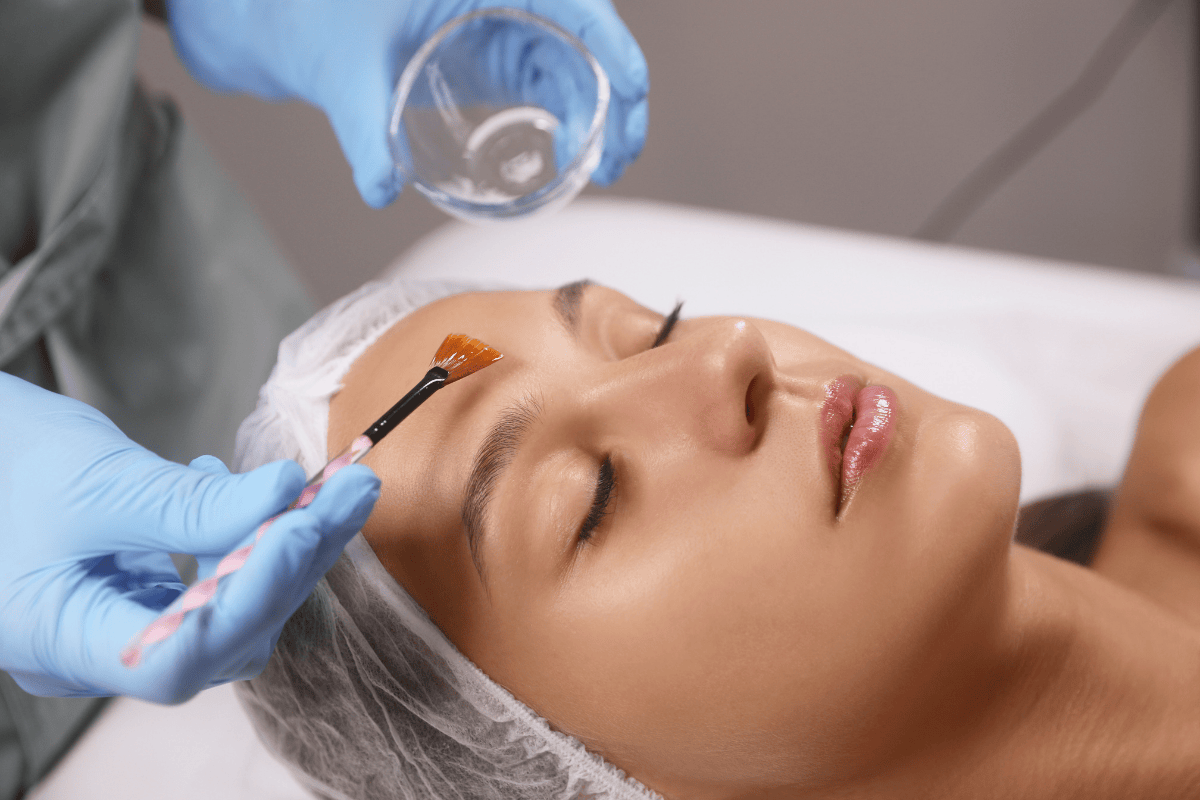
You’ll walk in, face clean, no makeup. The esthetician might ask if you’ve been using retinoids lately. They start by applying the solution — not with a spray, not with gloves, just a soft brush or cotton pad. It goes on quick.
Feels warm, almost like you’ve stepped into sunlight after being inside for hours. A few people say it tingles — others don’t even notice. One lady in the chair next to me said she thought it was her phone buzzing. Others barely notice. No pain. No burning. Just… something happening.
The acids? They’re not magic. But they’re smart. Glycolic? Small molecules. They slip into pores like quiet messengers. Lactic? That one’s the gentle one — keeps dry or sensitive skin from feeling tight afterward.
Salicylic? Oil-soluble. It dives under the surface, where breakouts hide. And mandelic? Slower. But that’s why it works so well for deeper skin tones — less risk, more healing.
None of them are “burning” you. They’re just telling dead skin cells: Hey. Time to go. Not a shove. More like a whisper.
Then comes the part people worry about: flaking.
Then, over the next few days — maybe day 3, maybe day 5 — you start noticing bits. Not all at once.
Don’t pick. Don’t scrub. Let it fall off on its own. It’s not damage — it’s renewal.
Why Peels Work When Other Things Don’t?
Here’s the thing most people miss: dull skin isn’t always dry. Sometimes it’s clogged and or layered. Like old paint on a wall.
You scrub. You use toners. You layer serums. But if the top layer of dead skin stays put, nothing really sinks in. Your moisturizer sits on top. Your vitamin C gets blocked. Your retinol irritates instead of helping.
Peels fix that.
They don’t just remove surface grime — they reset the skin’s surface. Think of it like rebooting a phone. All the junk apps get cleared. The system runs faster. Better. Cleaner.
And once that barrier is gone?
- Serums absorb instantly
- Moisturizers feel lighter, not greasy
- Makeup goes on like silk
- Sunscreen actually protects — no white cast, no patchiness
It’s not a miracle. It’s science. And it’s why dermatologists keep recommending peels — even for people who swear they “don’t need them.”
The Impact of the Peel on Your Skin Appearance
The peels indeed make skin look smoother. But here’s what people don’t share enough about it:
They stimulate collagen. While you are shedding dead skin, your body’s healing system kicks in. It forms new fibroblasts, and collagen builds back stronger. Over time, fine lines soften. Texture improves. Even pores seem smaller.
Some people have noticed this after the first peel. Then again, after the second. By the third, they were not just happy with their appearance; they were amazed by how their skin felt.
Soft. Supple. Not tight. Not oily. Just… balanced.
And the best part? It wasn’t temporary. After three sessions spaced six weeks apart, the results lasted months. I still use a light peel every 8–10 weeks as maintenance.
What Actually Happens — Day by Day
Let’s be honest: the process isn’t dramatic. It’s quiet. Almost uneventful.
You walk in clean-faced — no makeup, no oil, nothing. Maybe you’ve washed your face, but not scrubbed. The esthetician checks your skin, asks if you’ve used anything strong lately. Then she applies the solution — not with a spray, not with gloves, just a soft brush. It goes on fast. Warmth builds — like sunlight hitting your cheeks after being indoors. Some people say it tingles. Others barely notice. One woman next to me thought her phone was vibrating.
It lasts 5–10 minutes. Then it’s rinsed off with water.
Right after? Skin feels tight. Slightly flushed. Like you’ve just stepped out of a sauna. You’re given a soothing cream — usually fragrance-free — and told not to touch your face. No rubbing. No picking. Just let it do its thing.
Day 1–2:
Slight redness. Dry patches start showing up — mostly around the nose, jawline, forehead. You might look like you’ve got a light dusting of powder. It’s not flaking. It’s shedding. Don’t pick. Wait for the natural process to complete.
Day 3–5:
Flaking starts to show up more. Not all at once. Just bits. Sometimes on the pillow. Sometimes caught in the corner of the cheek. A damp cloth helps. Not rough. Not dry. Just soft and wet. No rubbing. No pressing. Let it come off. Doesn’t have to be perfect. Doesn’t have to be fast.
Day 6–7:
Most flaking stops. The new layer is coming in — bright, even, surprisingly resilient. It’s not shiny. Not greasy. Just… alive.
And then — you look in the mirror.
Not to fix. Not to hide. Just to see.
And suddenly, you realize: your skin feels different. Not better. Not prettier. Just… lighter. Like it’s finally breathing again.
How Often Should You Do One?
There is no rocket science applied to this question. It can be different from person to person and case to case. But, if we talk generally, here’s what works for most people:
- Light peels (glycolic, lactic): Every 4–6 weeks
- Medium peels: Every 8–12 weeks
- Deep peels: Only once a year, with recovery time and doctor supervision
For maintenance, many people stick to light peels every 6–8 weeks. It keeps the glow going without overdoing it.
And yes, you can do them at home. But only with low-strength formulas (like 5–10% glycolic acid). Skip the DIY deep peels. They’re dangerous without training.
Stick to reputable brands. Read labels. Know your skin.
Final thought
Glowing skin comes from what happens beneath the surface — the slow shift when layers finally start to move.
Some people try everything. Masks, oils, serums, and overnight creams. They add more—layer after layer. The top stays thick. Nothing really gets through.
A peel brings something different. Sunscreen remains part of the routine. Moisturizer still plays its role. It just adds another step. One that helps clear out what’s been sitting there too long.
It doesn’t happen fast. It doesn’t look dramatic. But over time, texture improves. Tone evens out. Light hits differently.
Trying a peel is about giving your skin a chance to reset. Not because it’s trendy. Because it works quietly and consistently.
Want to have expert advice how to get started with it for better and secured results? – Talk to our experts now.

Ilesh Khakhkhar
Author
Ilesh Khakhkhar is the Founder & Managing Director of UBIK Solutions Pvt. Ltd., a leading cosmeceutical company in India. Starting from humble beginnings in 2003 with Ethicare Remedies, Ilesh has expanded his influence across the dermatology industry with multiple ventures including Ethinext Pharma and My Derma Store.
YOU MAY ALSO LIKE

WRITE A COMMENT
Login
0 Comments
Oldest